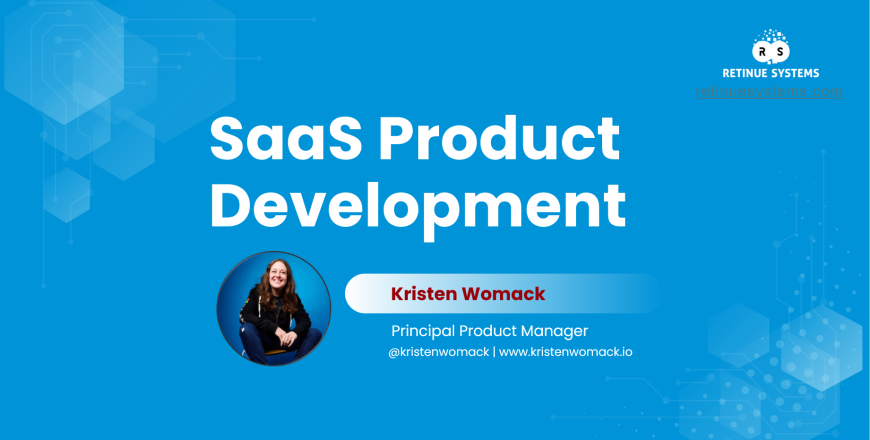

This course is taught by Kristen Womack, a Principal Product Manager at Microsoft and an impact‑driven product leader. As a 3x founder, she builds products and communities for developers, startups and small businesses. Here is what Kristen covers in this course:
In this course, Kristen shows you how to take your SaaS product beyond the MVP into a mature, scalable platform. You will explore how to select an architecture that balances performance with cost, use infrastructure as code (IaC) like Terraform to deploy and manage your stack, and leverage cloud services to monitor and maintain your SaaS.
Kristen digs deep into APIs, integrations, and tools such as the Azure Developer CLI (azd), demonstrating how they can speed up development and create competitive moats, and she introduces event driven systems to help you build flexible, responsive applications.
The course finishes with guidance on bringing AI into your SaaS product in ways that truly add value. Kristen shares her own experiences, including lessons learned from building products at multiple companies, to help you avoid common pitfalls and succeed faster.

-
3
 From Concept to MVP
A summary of how to refine an idea into a minimum viable product (MVP) to provide context before diving into post‑MVP development.
-
4
Code vs No-Code
A comparison of traditional coding approaches and no‑code tools, with guidance on when each is appropriate in SaaS projects.
-
5
Validate Before you Build
An explanation of the importance of customer discovery and testing assumptions before committing to full-scale development.
-
6
Cloud First SaaS Architecture
An introduction to cloud-first principles and why modern SaaS products benefit from building on scalable cloud infrastructure.
-
7
Architecture Decisions
A discussion of key architectural choices such as multi‑tenant versus single‑tenant and monolith versus microservices and their impact on scalability and maintainability.
-
8
Cost Control
Strategies for managing infrastructure spend and forecasting costs as your SaaS grows.
-
9
Infrastructure as Code
A walkthrough of using tools like Terraform, Bicep, or Azure CLI to automate and version-control your infrastructure deployments.
-
10
Monitoring
Best practices for observability, alerting and logging to keep your application healthy and responsive.
-
11
Integrations & APIs
An overview of the role APIs and integrations play in building a robust SaaS ecosystem.
-
12
Build Faster with APIs
Insight on leveraging APIs to accelerate feature development and reduce time to market.
-
13
Integrations for Growth
Insights into how connecting with other platforms can drive adoption and open new markets.
-
14
API First
Guidance on designing your product around an API-first mindset to enable extensibility and partner integrations.
-
15
Event Driven Systems
An introduction to event-driven architecture and how it helps you build decoupled, responsive services.
-
16
AI in SaaS
A primer on how machine learning and AI can enhance your product with intelligent features.
-
17
Implementation
A step‑by‑step look at integrating AI capabilities into an existing SaaS stack, from data collection to deployment.
-
18
AI Cost Management
Advice on budgeting and optimizing the costs associated with training and running AI models.
-
19
Responsible AI
A discussion on ethical considerations, fairness and transparency when using AI in your software.
-
20
AI Strategy
Frameworks for defining a long‑term AI roadmap that aligns with your product vision and customer needs.
-
21
Wrap Up
A recap of the course’s key takeaways and encouragement to apply what you’ve learned to your own SaaS project.

 Google